Ecommerce web design agency for shops that sell
Axarez is an ecommerce web design agency for UK businesses that want to sell online. We build online shops that load fast, make buying easy on a phone, and are simple for you to run day to day.
- Shopify, WooCommerce or custom
- Mobile-first checkout
- SEO-ready product pages
By the Axarez team, BirminghamUpdated 19 Nov 2026
Ecommerce web design for UK businesses
Ecommerce web design is the planning, design and build of an online shop: product pages, categories, basket, checkout, payments and delivery. A good online shop makes it quick to find a product and easy to pay on a phone, because every extra step in the checkout loses sales.
As an ecommerce web design agency, we design online shops for UK businesses of different sizes: independent retailers moving online, local shops adding click-and-collect, and businesses that sell a small range of products alongside a service.
The aim is the same every time. Customers should find what they want in a few taps, trust the shop enough to pay, and get clear delivery information before they reach the checkout. Behind the scenes, you should be able to add products, change prices and handle orders without calling us.
What our ecommerce web design services include
Every ecommerce website we build includes product and category pages, search and filters, a secure checkout with card and wallet payments, delivery and collection rules, order emails, SEO for products and categories, and sales tracking. You also get training, so your team can run the shop from day one.
Product and category pages
Clear photos, descriptions, variants such as size or colour, and stock levels, laid out so people can compare quickly.
Search and filters
Customers narrow down by size, price, brand or any attribute that matters for your products.
Secure checkout
Card payments plus wallets like Apple Pay and Google Pay, through trusted payment providers.
Delivery and collection
Shipping zones, delivery rates, free-delivery thresholds and click-and-collect, shown before checkout.
SEO for products
Product and category pages structured to rank, with product schema so Google can show price and stock.
Sales tracking
Analytics that show which products sell, where buyers come from and where people drop out.
Ecommerce website design that increases sales
Good ecommerce website design removes reasons not to buy. That means showing delivery costs early, allowing guest checkout, keeping the checkout short, showing reviews and returns information near the buy button, and making every step easy on a phone. Small details in the checkout often matter more than the home page.
| Where buyers drop out | What we design in |
|---|---|
| Surprise delivery costs | Delivery prices and times shown on product pages and in the basket |
| Forced account creation | Guest checkout, with an optional account after purchase |
| Long, fiddly forms | Short checkout, address lookup and wallet payments |
| Lack of trust | Reviews, clear returns policy and contact details near the buy button |
| Hard to find products | Simple categories, filters and search that handles typos |
Shopify, WooCommerce or custom: which platform?
Shopify suits most shops that want something reliable and easy to run, with a monthly platform fee. WooCommerce suits businesses that want more control and already use WordPress. A custom build suits shops with unusual needs, such as live stock from another system or products combined with bookings.
| Shopify | WooCommerce | Custom build | |
|---|---|---|---|
| Running costs | Monthly Shopify plan plus app fees | Hosting plus any paid plugins | Hosting only |
| Ease of use | Very easy | Easy once set up | Built around your process |
| Flexibility | High, through apps | Very high | Unlimited |
| Best for | Most product shops | Shops that want full control | Live stock, bookings or unusual checkouts |
We recommend a platform after we understand what you sell, how many products you have and how you handle stock today. If you’re already on a platform and it works, we can redesign your shop without moving it.
Ecommerce website development: the parts customers don’t see
Ecommerce website development covers everything behind the shop front: payment setup, stock syncing, order notifications, tax and delivery rules, and connections to the tools you already use. Getting these right is what stops overselling, missed orders and hours of manual admin each week.
- Stock that stays accurate: sync stock with your till, warehouse or even a Google Sheet, so you never sell something you don’t have.
- Order notifications: clear emails for customers, and alerts for your team when an order comes in.
- Integrations: connect accounting, delivery and email marketing tools so data doesn’t need re-typing.
- Migration: moving from another platform, keeping your products, customers and the pages that already rank on Google.
Live stock and online booking on a website
Not every shop fits a standard template. For a tyre fitter in Stoke-on-Trent we built live stock that syncs from a Google Sheet onto the website, where customers filter by size, see real prices and book a fitting slot. It shows how we approach shops with unusual stock, pricing or booking needs.
See how it works on our bespoke web development page, or browse some of the websites we’ve built:
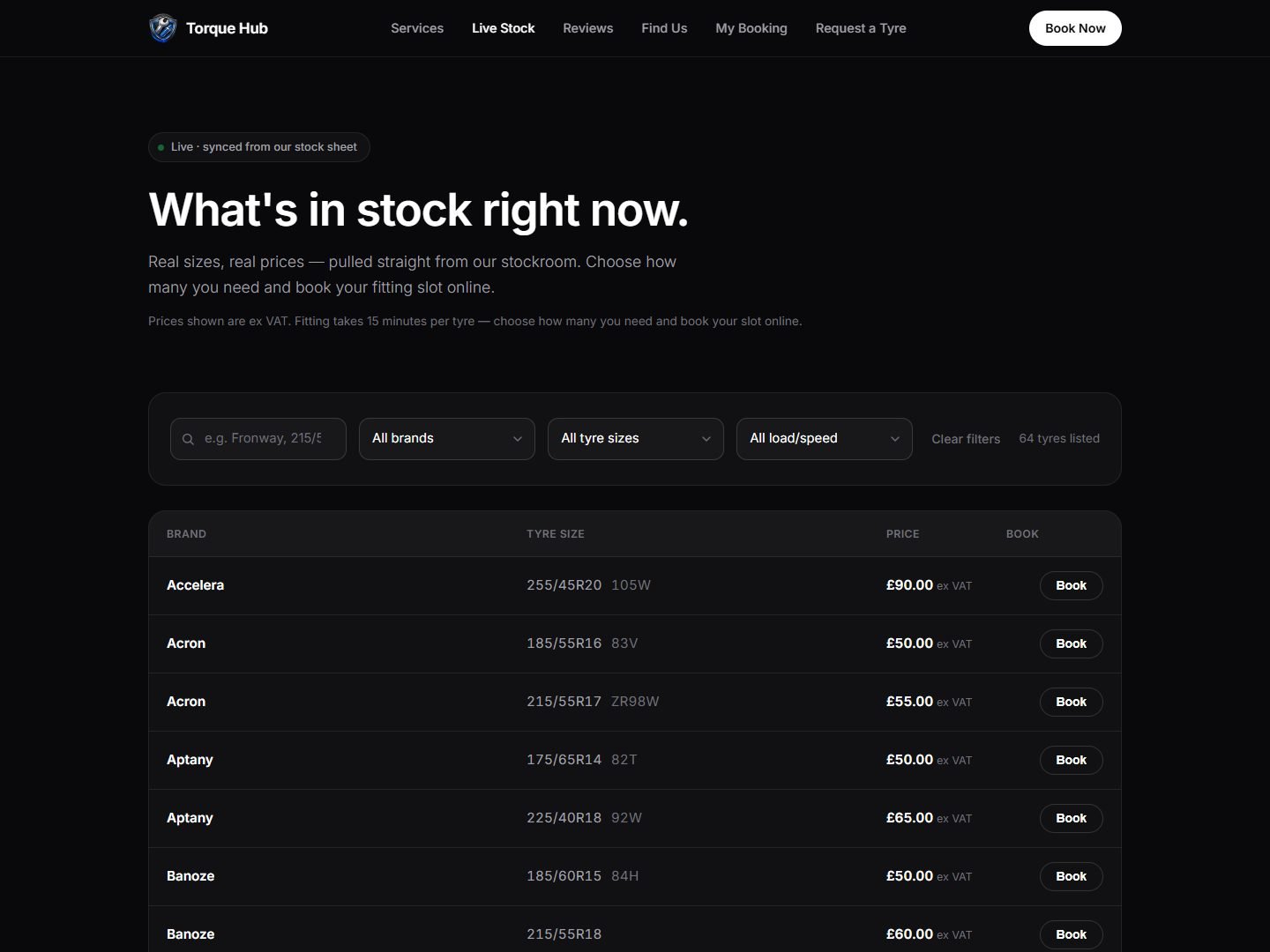 Torque HubWebsite, local SEO, and a custom stock and booking system
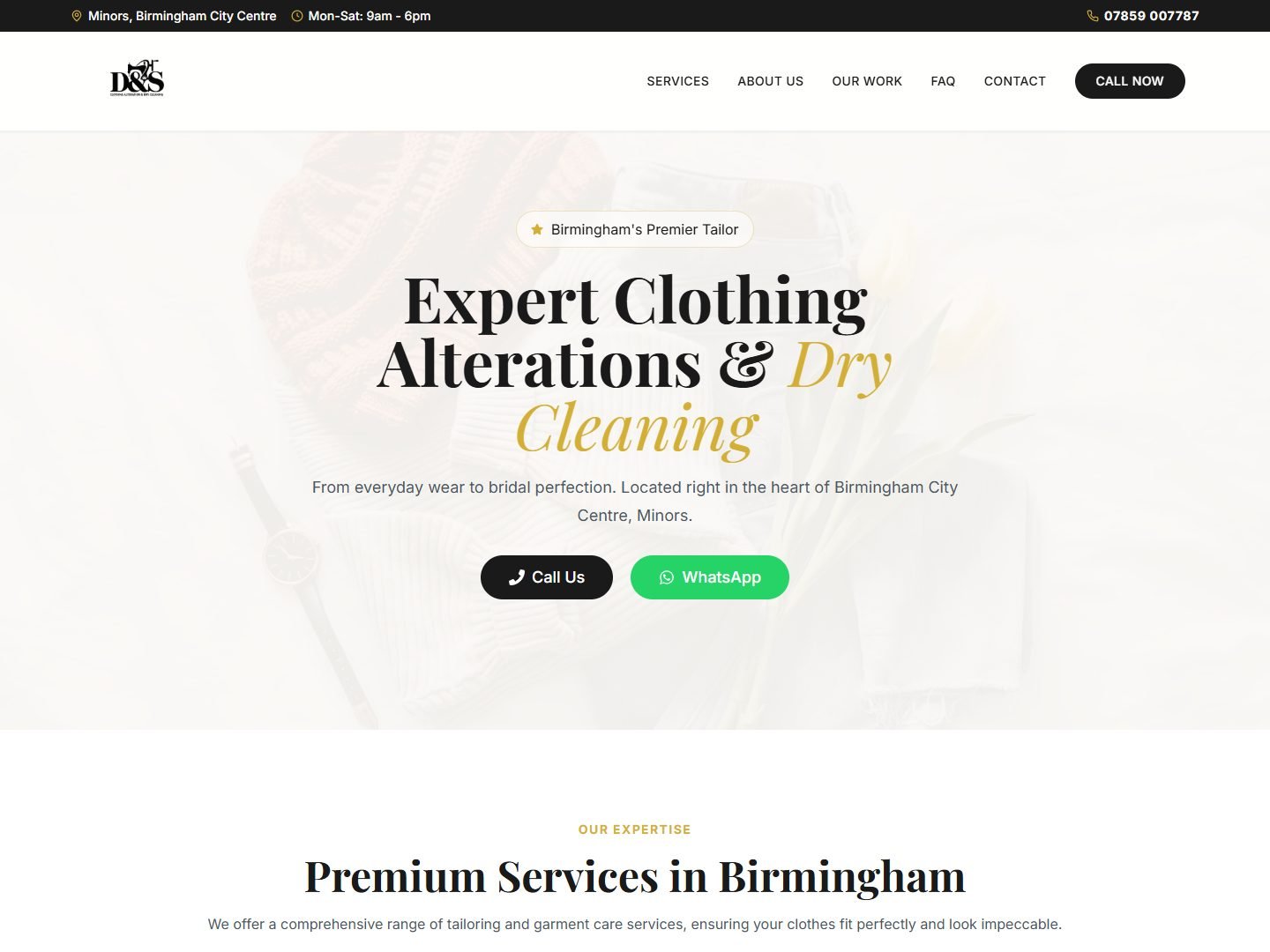 D&S AlterationsWebsite, local SEO and WhatsApp enquiries
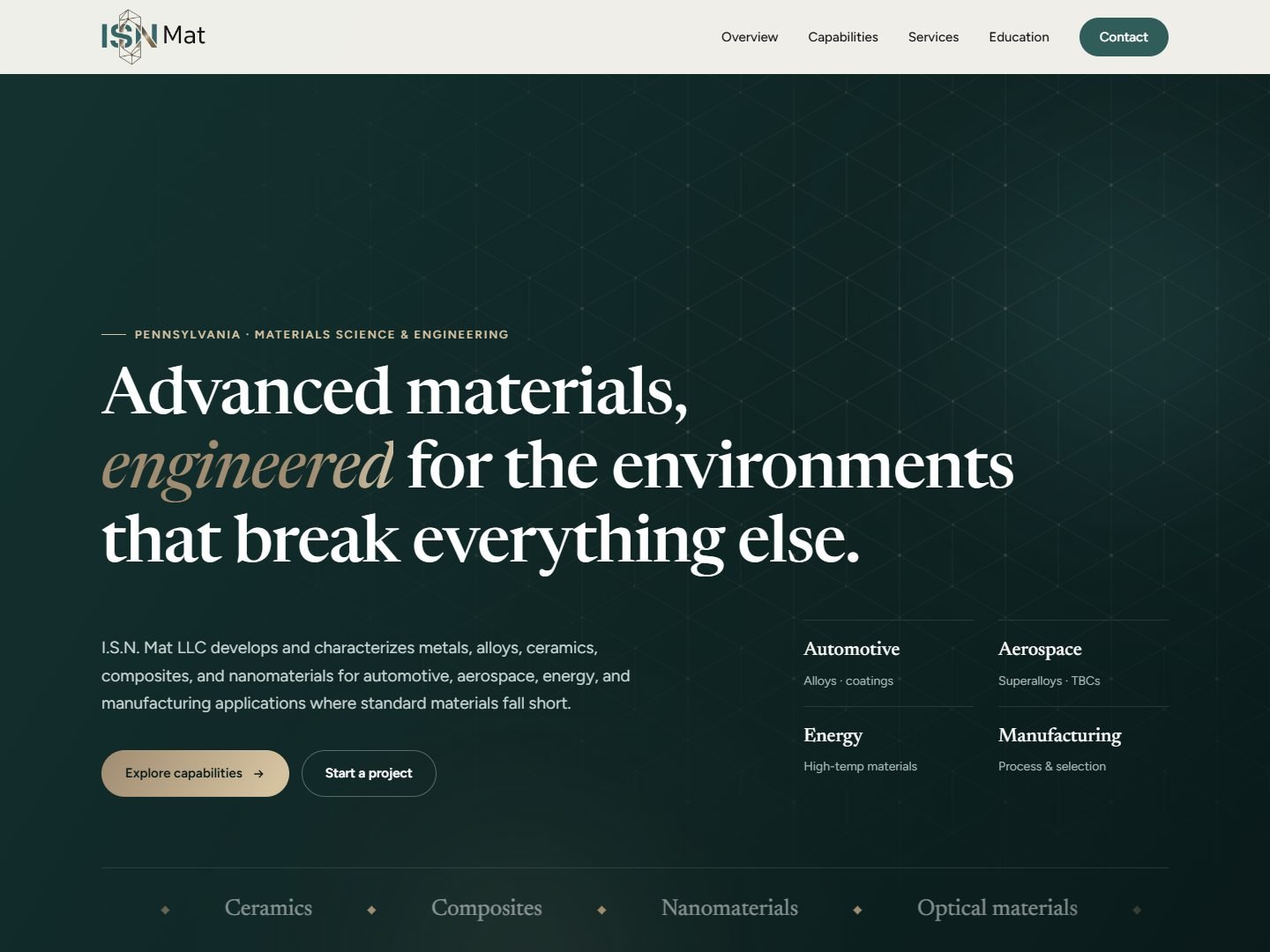 I.S.N. MatWebsite, SEO setup and schema markup
How we build your online shop
We build online shops in five steps: plan your product structure and platform, design the key pages, set up products, payments and delivery, test every route to checkout on real phones, then launch with tracking and training. Larger catalogues take longer, mainly because of product data.
- PlanProducts, categories, delivery rules and the right platform for how you sell.
- DesignHome, category, product, basket and checkout pages designed mobile-first.
- Build and set upProducts imported, payments connected, emails and tax rules configured.
- TestReal test orders on real phones, including refunds and stock changes.
- Launch and trainAnalytics and Google Search Console connected, and your team shown how to run the shop.
Shopify pros and cons for your online store
Shopify is the easiest way for most UK businesses to run an online store: it handles hosting, security and payments, and has apps for almost everything. The trade-offs are a monthly fee, extra costs for apps and transaction fees, and less flexibility than WooCommerce or a custom build for unusual products or checkouts.
| Shopify pros | Shopify cons |
|---|---|
| Quick to launch and easy for your team to use | Monthly plan plus paid apps add up |
| Hosting, security and updates handled for you | Transaction fees unless you use Shopify Payments |
| Strong checkout that customers already trust | Less control over checkout and some SEO settings |
| Thousands of apps and themes | Unusual products or pricing rules can need workarounds |
If you need WordPress, a WooCommerce developer approach gives you more control; if you need live stock, bookings or custom pricing, a custom build often fits better.
What affects the cost of an ecommerce website in the UK
The cost of an e-commerce website depends mostly on the number of products and categories, the platform and how much of the design is custom. Integrations (stock, accounting, delivery), product writing and moving from another platform add to it. We quote every online store individually so the price matches what you actually need.
- Catalogue size: 20 products and 2,000 products are very different projects.
- Design: a customised theme or a fully bespoke design.
- Integrations: stock, accounting, delivery and email marketing tools.
- Content: product photos, descriptions and SEO for categories.
- Migration: moving products, customers and rankings from another platform.
Already have an online shop?
If your online shop gets visitors but few sales, a redesign of the key pages (product, basket and checkout) is often more effective than starting again. We review where buyers drop out, fix the biggest problems first, and only recommend a full rebuild or platform move when your current setup is holding you back.
Signs your shop needs work: it’s slow on a phone, customers email to ask questions the product page should answer, people add to basket but don’t finish, or you can’t easily update products yourself.
Why choose Axarez as your ecommerce web design agency
We treat every online shop as a sales project, not just a design project. You get a shop planned around how your customers buy, with SEO for every product and category, connected to the tools you already use. The same team can also run your SEO and Google Shopping ads.
- Platform advice without bias: Shopify, WooCommerce or custom, based on what you sell.
- Experience with live stock and bookings: for shops that don’t fit a template.
- SEO from the start: product and category pages built to rank.
- Training included: your team can run the shop from launch day.
- Ongoing care: shops we build can be looked after through our website maintenance service.
Ecommerce SEO: getting your shop found on Google
An online shop needs visitors to sell. We build every shop with SEO-ready product and category pages, then help you grow traffic through SEO and Google Ads, including Google Shopping, which shows your products with photos and prices at the top of Google.
Selling from Birmingham? See our ecommerce website design in Birmingham.
See our SEO services for organic traffic and PPC management for Google Ads and Shopping campaigns. If you sell mainly to local customers, local SEO helps you show up on Google Maps too.
Need a website without a shop? See our web design services, or web design in Birmingham.
Talk to us
We build online shops from Birmingham city centre for businesses across the UK. Call us on 07979 862868, or tell us what you sell and we’ll recommend a platform and send a fixed quote. Local to us? See ecommerce website design Birmingham.
Sources
Ecommerce Web Design: questions people ask
How much does Shopify cost to run?
Shopify charges a monthly plan, with cheaper rates if you pay yearly, plus card processing fees on each sale. Paid apps and a premium theme add to that, and an extra transaction fee applies if you use a payment provider other than Shopify Payments. Check Shopify’s own pricing page for current UK figures before you decide.
What is a payment gateway?
A payment gateway is the service that securely takes a customer’s card or wallet payment and passes the money to your bank account, such as Stripe, PayPal or Shopify Payments. It handles the security checks, so card details never sit on your own website.
How do I start an online shop?
Work out what you will sell, your delivery and returns rules and your margins after fees first. Then choose a platform, get good photos and honest descriptions for each product, set up payments and test the checkout on a phone. Plan how people will find the shop, through Google, ads or existing customers, before you launch.
What is Google Shopping?
Google Shopping shows products with a photo, price and shop name in Google search and its Shopping tab. Products appear through a feed from Google Merchant Center: some listings are free, and Shopping ads put your products at the top for a cost per click.
( Get a quote )
Ready to start
selling online?
- A real person reads your message, usually the same working day
- We may ask a couple of questions about your business
- You get a clear plan and a fixed quote. No obligation